

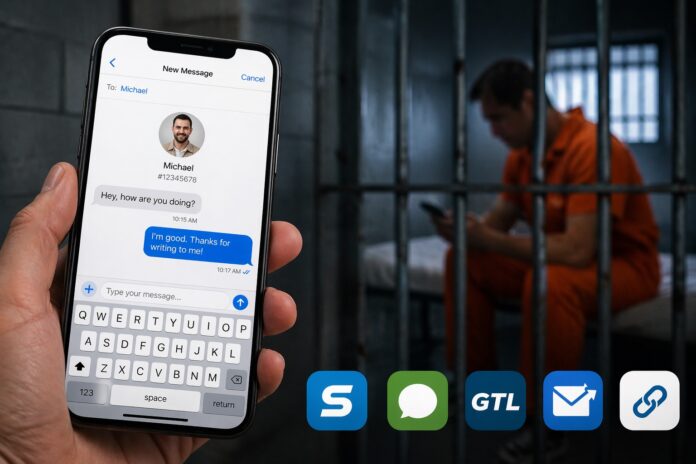
Some apps you download out of curiosity. Others because your friends are already using them. And then there are the apps you install out of necessity — because there simply isn’t another option.
Inmate texting apps fall firmly into that third category. There’s no leisurely comparison of features, no debate over star ratings. In most cases, you’re directed to a specific platform by the facility your loved one is housed in, and that’s the one you use. The choice is often made for you before you even begin.
But understanding this landscape still matters. Because even within the constraints of institutional systems, some platforms handle the experience better than others — and knowing what to expect before you dive in can spare you a great deal of confusion, frustration, and unexpected expense.
This guide is for families, partners, and friends who are new to this world. It won’t pretend these apps are seamless. But it will help you get the most out of whichever one you end up using.
Why This Isn’t Like Other Messaging
If you’ve grown up with iMessage, WhatsApp, or any modern messaging app, you carry certain invisible expectations. Messages are instant. Conversations flow back and forth like spoken dialogue. A photo sends in seconds. The only real frustration is whether someone has read your message and chosen not to reply.
Inmate texting apps operate in an entirely different framework.
Here, every message is subject to monitoring and review. Communication may be delayed by hours — sometimes longer. Sending a message often costs money. And everything happens within a system designed not around user experience, but around institutional control and security compliance.
This isn’t a criticism. It’s context. These platforms exist within correctional systems, and the rules of those systems govern everything about how communication works. Once you understand that, the experience stops feeling broken or confusing. It starts feeling like what it actually is: a constrained but functioning bridge.
Adjusting your expectations isn’t the same as lowering them. It’s about approaching the experience on its own terms — and finding the space within those terms to maintain something meaningful.
The Question Everyone Asks First
“What’s the best inmate texting app?”
It’s the most natural question in the world. And the honest answer is: it depends almost entirely on which facility your loved one is housed in.
Unlike most app categories — where you research, compare, and choose — inmate communication platforms are tied to institutional contracts. Facilities partner with specific technology providers, and that partnership determines which platform is available to you. Your role as a family member or friend is not to pick the best tool; it’s to learn how to use the one already in place.
That said, there’s still real value in understanding what each platform offers, how they differ, and what you should watch out for. Because even within a single platform, knowing how to navigate it effectively can make a significant difference — in ease of use, in cost management, and in keeping communication as consistent as possible.
The Apps You’ll Most Likely Encounter
The landscape of inmate communication apps is notably concentrated. A small number of providers cover the vast majority of correctional facilities across the United States. Here are the platforms you’re most likely to come across:
- Securus Mobile
- GettingOut (by Telmate)
- ConnectNetwork (by GTL)
- JPay
- CorrLinks
Each of these platforms has earned its place in the market not through popular choice, but through institutional adoption. They are embedded in correctional infrastructure, which means they come with trade-offs: they can feel dated, they often prioritize compliance over convenience, and they can be more expensive than you’d expect. But they also carry something more important in this context: reliability.
Securus Mobile: Widely Used, Widely Known
Securus Mobile is, for many people, the first name they encounter in this space — and there’s a reason for that. The platform is used across an enormous number of correctional facilities, making it the default experience for a significant portion of families navigating this system.
On paper, Securus does quite a lot. It handles messaging, account funding, photo sharing, and in many facilities, video calls. It attempts to be a single-platform solution to the communication needs of incarcerated individuals and their families.
In practice, the experience is functional rather than fluid. The interface shows its age. Navigation can feel clunky. Pricing isn’t always transparent upfront, and message delivery isn’t always instant. Costs accumulate more quickly than new users typically anticipate.
And yet, within those limitations, Securus works. Messages get through. Video calls connect. Features — even the clunkier ones — operate as intended often enough to maintain their importance.
If Securus is your platform, lean into understanding its pricing structure early. Know what each type of communication costs before you’re surprised by a balance running dry. The platform rewards users who take the time to understand it.
GettingOut: A More Considered User Experience
Among the major players, GettingOut stands out for one specific reason: it seems to genuinely care about the person using it.
The interface is noticeably cleaner than some of its competitors. Features like photo sharing and video visits are integrated more intuitively. The overall design suggests that someone, at some point, thought seriously about what families experience when they open this app — and tried to make that experience less jarring.
This doesn’t mean GettingOut transcends the underlying constraints. Communication is still monitored. Delays still happen. Messaging still costs money. But the way those realities are presented — the flow of the app, the clarity of its navigation — makes them feel less like obstacles and more like known parameters.
For users who will be interacting with this platform daily or several times a week, that difference in experience compounds over time. A slightly more intuitive interface means fewer moments of confusion. Clearer pricing means fewer unexpected charges. And better-integrated media features mean more ways to stay meaningfully connected.
If you’re using GettingOut, take advantage of the photo sharing feature when the facility allows it. Small visual connections — a photo from home, a picture of a family meal, a snapshot from a recent event — can carry enormous weight in this context.
ConnectNetwork (GTL): Infrastructure First, Experience Second
ConnectNetwork, associated with GTL (Global Tel Link), is a platform that earns its reputation through reach rather than refinement.
It is, in the most literal sense, everywhere. Across a wide range of facilities and jurisdictions, GTL’s infrastructure handles the backbone of inmate communication. Messaging, account deposits, and telephone services all flow through its systems.
The experience itself is utilitarian. The interface is dated. Navigation requires patience. Performance can be inconsistent depending on network conditions and facility configurations.
But what ConnectNetwork lacks in polish, it makes up for in dependability. It doesn’t pretend to be something it isn’t. It doesn’t offer features it can’t consistently deliver. It simply provides the core services — messaging, deposits, account management — and does so with the quiet consistency that comes from deep institutional integration.
For users, the key is managing expectations. Approach ConnectNetwork as infrastructure, not as a consumer app. It won’t dazzle you, but it’s unlikely to fail you in the ways that matter most.
JPay: A Broader Communication Ecosystem
JPay takes a noticeably different approach. Where other platforms focus primarily on messaging, JPay positions itself as a more comprehensive communication and support system.
In addition to messaging — which here functions more like email than real-time chat — JPay handles money transfers, photo sharing, and in some facilities, integration with inmate tablet programs. It’s designed to serve as a central hub for multiple facets of the family-inmate relationship, not just written communication.
This broader scope means the experience is slower and more structured. Conversations don’t flow the way they do in instant messaging apps. There’s a cadence to JPay communication that feels more deliberate — a sent message, a wait, a response. For some users, this rhythm can actually be easier to manage. For others, it takes adjustment.
Where JPay genuinely shines is in its money transfer functionality. Sending funds to an incarcerated loved one’s account is a common and important need, and JPay makes that process relatively streamlined. If financial support is a regular part of your routine, JPay’s broader feature set becomes a meaningful advantage.
CorrLinks: The Federal System Standard
If your loved one is in a federal facility, there’s a strong chance CorrLinks is the platform you’ll be using. It serves as the primary communication tool within the Federal Bureau of Prisons, giving it a specific and clearly defined role in this landscape.
CorrLinks won’t win any awards for visual design. The interface is deliberately spartan — it looks and feels utilitarian in a way that reflects its institutional origins. But what it offers in return for that austerity is something more valuable in this context: predictability.
With notifications properly configured, messages through CorrLinks can approach something closer to the rhythm of real communication. Response times can be faster than other platforms. The process of sending and receiving is consistent and relatively straightforward once you’ve learned the initial setup.
For users navigating the federal system, CorrLinks is not a limitation — it’s the tool. Learn it well. Understand the approval process for adding contacts, which can take several days. Set up notifications so you’re alerted to new messages promptly. And appreciate that within the constraints of federal communication systems, CorrLinks provides a reliable and functional means of staying connected.
What Every Platform Has in Common
Whatever platform you end up using, certain realities remain constant. It’s worth naming them clearly, not to discourage, but to prepare:
- Messages are monitored. This is not optional, not occasional, and not a feature that can be disabled. It is a structural reality of inmate communication.
- Delays are normal. Whether due to review processes, network conditions, or system queues, messages in this space are rarely instant.
- Communication costs money. Every major platform involves some form of per-message fee, credit system, or subscription. Understanding how your platform charges before you start is essential.
- The system sets the pace. There is no workaround, no shortcut, and no premium tier that removes institutional constraints. The facility’s rules govern what is possible.
None of this is unique to a specific platform. It’s the nature of the environment. And once it’s understood and accepted, it becomes much easier to focus on what actually matters: making the most of the communication that is available.
What Actually Distinguishes One App From Another
Given that the core constraints are universal, what separates a good experience from a frustrating one? In practice, it usually comes down to a handful of smaller, human-scale factors:
- Interface clarity: Is it easy to find what you need? Can you navigate the app without feeling like you’re fighting against it?
- Pricing transparency: Does the app clearly show what things cost before you commit? Are charges easy to track over time?
- Reliability: Do messages get through consistently? Are errors and glitches frequent or rare?
- Support responsiveness: When something goes wrong — and occasionally, something will — is there a reasonable path to resolution?
- Overall performance: Does the app respond quickly, or does every action feel like a wait?
These aren’t the kinds of things that show up in marketing materials. But they are the things that shape your day-to-day experience of staying in touch with someone you care about. Over weeks and months of regular use, they matter enormously.
The Cost Conversation You Need to Have Early
It bears repeating, because it catches many people off guard: inmate messaging is not free.
The apps themselves are free to download. But the communication they facilitate is not. Whether through per-message fees, stamp or credit systems, or subscription models, there is a cost attached to staying in touch.
The structure of these costs varies between platforms and is not always presented in the most intuitive way. Some apps charge per message. Some use a credit or “stamp” model where you purchase bundles. Some include messaging within broader account services that also cover calls and video visits.
The important thing is not to assume. Before you start using any platform, spend time understanding exactly what each type of communication will cost. If you’re unsure, most platforms have customer support lines that can walk you through the fee structure.
Setting a budget and understanding how quickly credits or funds are consumed will prevent the unpleasant experience of running out mid-conversation — which, beyond the financial inconvenience, carries a particular emotional weight when the conversation is with someone who has very limited means of reaching out.
Building a Rhythm That Sustains You Both
One thing that strikes almost everyone new to inmate communication apps is how quickly the experience normalizes.
The first few weeks often feel jarring. Messages take longer than you expect. The interface feels unfamiliar. The monitoring, the costs, the delays — all of it lands at once, and it can feel like the technology is working against you.
But over time, something shifts. You develop a rhythm. You know roughly when messages will arrive. You know when to check the app. You understand the pacing of communication in this environment and adjust your expectations accordingly.
This isn’t resignation. It’s adaptation. And it’s something that families and friends who maintain strong connections with incarcerated loved ones consistently describe: you stop comparing this communication to other forms of communication, and you start appreciating it on its own terms.
Consistency matters enormously in this context — for you and for the person you’re staying connected with. A message sent regularly, even a short one, carries weight that goes beyond its content. It says: I’m here. I haven’t forgotten. I’m still with you.
The technology, imperfect as it is, makes that possible. That’s not a small thing.
Practical Tips Before You Get Started
Regardless of which platform you’ll be using, a few practical steps will save you time, confusion, and money:
- Verify the platform with the facility directly. Don’t assume based on general research — contact the facility or check their official communications to confirm which platform is used.
- Complete the account verification process fully. Most platforms require identity verification before communication is approved. Do this early, as it can take several days.
- Understand the contact approval process. In most cases, you need to be approved as a contact before messaging can begin. This process varies by facility and platform.
- Read the pricing structure before adding funds. Know what each type of message or communication costs so you can manage your balance effectively.
- Set up notifications. Receiving a prompt alert when a new message arrives makes the communication feel more immediate and ensures you don’t miss messages.
- Keep a record of your account details. Given the emotionally high-stakes nature of this communication, losing account access due to a forgotten password creates unnecessary stress.
Final Thoughts
Inmate texting apps occupy a unique and, in some ways, sobering space in the technology landscape. They don’t compete for delight. They don’t chase the latest design trends. They exist to serve a very specific, very human need within a system that imposes strict constraints on how that need can be met.
The best platforms in this space — Securus Mobile, GettingOut, ConnectNetwork, JPay, and CorrLinks — do what they’re supposed to do. Not always gracefully. Not without friction. But reliably enough to keep lines of communication open between people who need them.
If you’re new to this world, approach it with patience and practical preparation. The technology will not feel seamless. The costs will require management. The process will require adjustment.
But it works. And for the families and friends who rely on it, that is everything.
Frequently Asked Questions
What is the best inmate texting app in 2026?
There is no single “best” app — the right platform depends entirely on which correctional facility your loved one is housed in. Common platforms include Securus Mobile, GettingOut, ConnectNetwork, JPay, and CorrLinks. Contact the facility directly to confirm which platform they use.
Can you text inmates the same way you’d text anyone else?
No. Inmate messaging is fundamentally different from standard text messaging. Messages are subject to monitoring and review, which can cause delays. Communication typically requires payment through credits or a fee-per-message system. All messaging occurs within the specific rules and constraints of the facility and platform.
Which app is used for inmates in federal prisons?
CorrLinks is the primary communication platform within the Federal Bureau of Prisons. The contact approval process can take time, so it’s worth starting the setup process early.
Are inmate messaging apps free to use?
The apps themselves are free to download, but sending messages, photos, or making video calls is not free. Review the pricing structure of your specific platform before adding funds to avoid unexpected charges.
Can you send photos through inmate messaging apps?
Yes, several platforms support photo sharing — including GettingOut and JPay — subject to facility rules. Photos are typically reviewed before delivery, and there may be restrictions on content and file size.
How long does it take for messages to be delivered?
Delivery times vary by platform and facility. Messages are subject to monitoring and review, which means they are rarely instant. Building in realistic expectations around timing will help you manage the experience better.
What should I do if I have a problem with the app?
Each platform has a customer support channel — typically a phone line, email address, or help center. Don’t hesitate to reach out if something isn’t working. Document any issues with dates and descriptions, as this helps support teams resolve problems more efficiently.
